

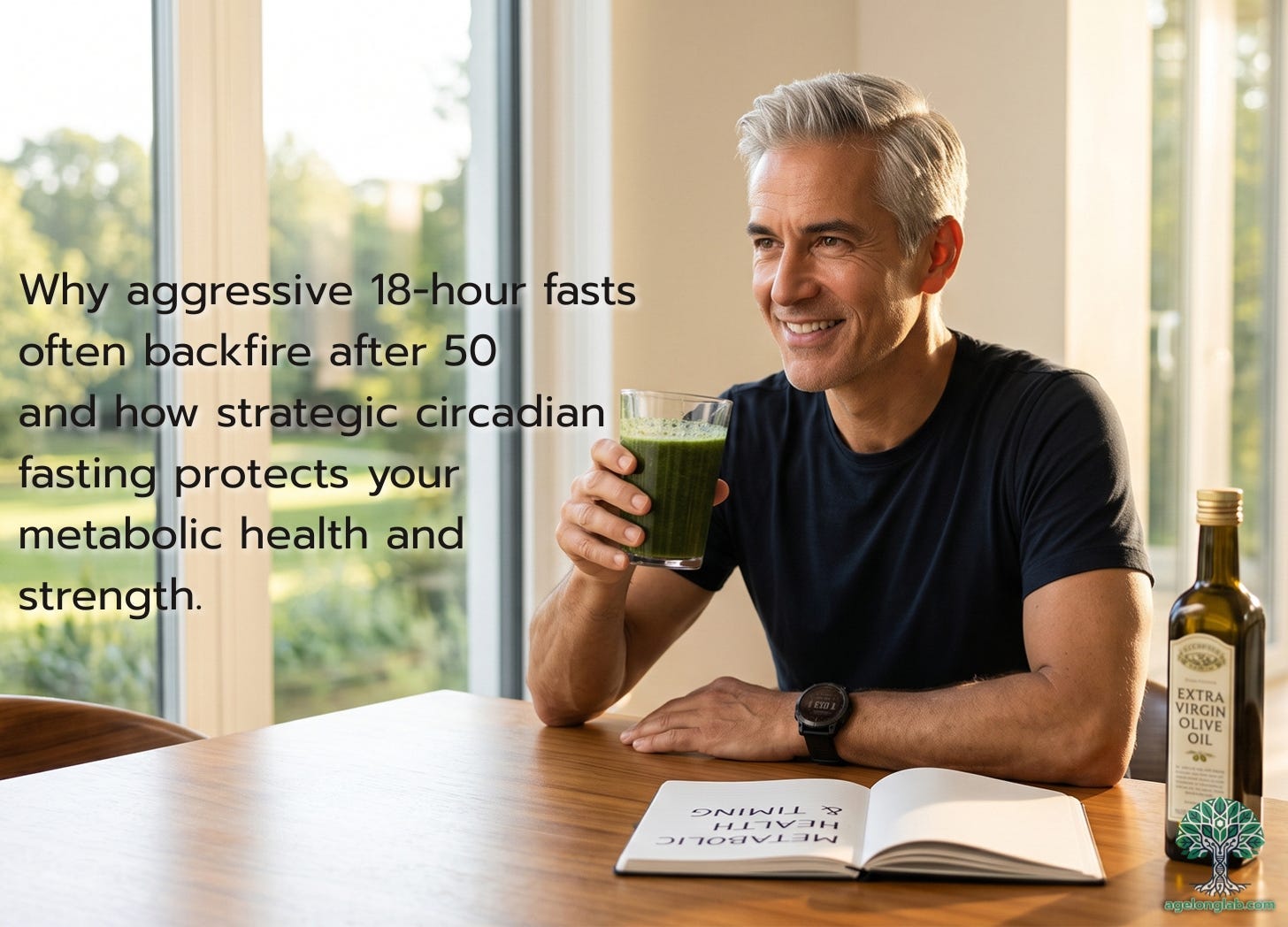
Intermittent Fasting (IF) has taken the longevity world by storm. We hear endless praise about the cellular clean-up process known as autophagy The body’s natural system for removing damaged cell parts and reducing cellular inflammation.
Naturally, many people in their 50s jump straight into aggressive 18:6 or 24-hour fasts hoping for a quick health reset.
However, after age 50, aggressive fasting comes with a hidden trap.
Extremely long fasts often accelerate muscle wasting and trigger https://pmc.ncbi.nlm.nih.gov/articles/PMC3183816/ meaning it becomes significantly harder for your body to synthesize new muscle when you finally do eat. Muscle is your primary metabolic armor; losing it to achieve cellular repair is a dangerous trade-off.
Here is the AgeLong Lab Strategic Fasting Protocol tailored specifically for the 50+ body.
1. Shift to “Circadian Fasting” (12:12 to 14:10)
You don’t need a grueling 18-hour fast to reap metabolic benefits.
The Sweet Spot: A 12-to-14-hour overnight fast (e.g., finishing dinner by 6:30 PM and eating breakfast at 8:30 AM) provides a powerful metabolic reset without placing your body into a catabolic, muscle-burning state.
Align with Your Master Clock: Fasting overnight aligns with your natural circadian rhythm, allowing your digestive tract to rest while keeping daytime energy and metabolic rate high.
2. Hit the “Leucine Threshold” When Breaking Your Fast
How you break your fast dictates whether your body rebuilds muscle or continues to break it down.
Avoid Carb Spikes: Breaking a fast with high-glycemic carbohydrates (like pastries, sugary fruit juices, or processed cereal) causes massive insulin spikes and blood sugar crashes.
Prioritize High-Quality Protein: Break your fast with dense protein and healthy fats. Refer to our high-quality protein protocol to ensure each meal hits at least 25–35 grams of complete protein to trigger muscle synthesis instantly.
3. Maintain Hydration & Electrolyte Balance
During the fasting window, lower insulin levels cause the kidneys to excrete sodium and water rapidly. This is why many people experience morning brain fog, fatigue, or muscle cramps during a fast.
The Morning Water Protocol: Start your day with a large glass of filtered room-temperature water mixed with a pinch of unrefined sea salt or electrolytes. This hydrates your nervous system immediately without breaking your fast.
💡 The 50+ Fasting Takeaway
Don’t Over-Fast: Stick to a safe, sustainable 12–14 hour overnight fasting window.
Break Fast with Protein: Always prioritize clean protein and healthy fats over refined carbs to protect your muscle mass.
Protect Your Muscle: Remember that in your 50s, preserving functional muscle mass is just as vital for longevity as cellular cleanup.
“Fasting is a tool, not a contest. Respect your physiology, protect your muscle, and let time work for you.”
To your ongoing vitality and strength,
Dejtana
50+ Practitioner & Founder of AgeLong Lab