

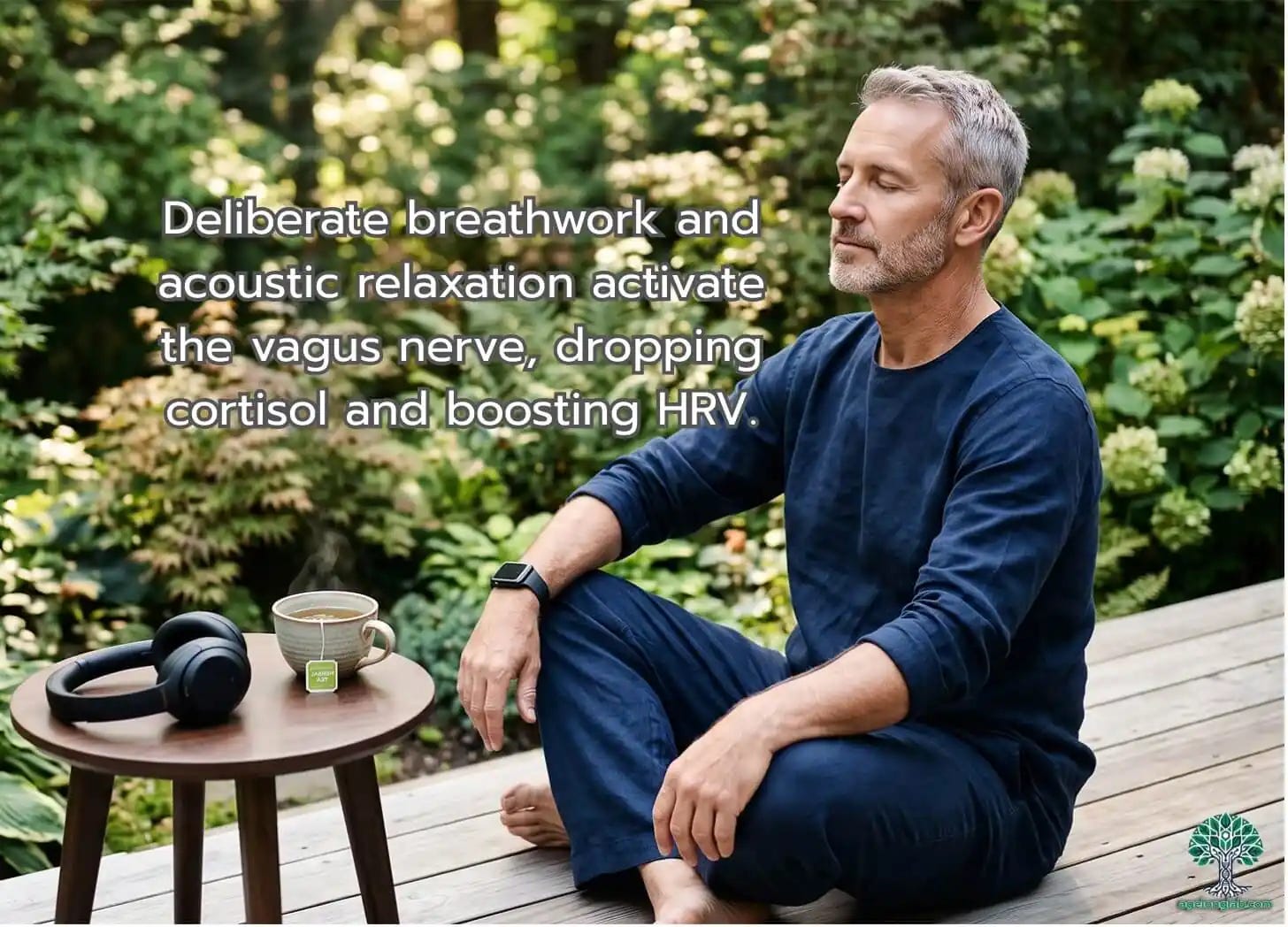
We live in a world that glorifies constant hustle, screen-time saturation, and non-stop productivity. By the time we reach our 50s, our autonomic nervous system has weathered decades of accumulated professional, financial, and personal stresses.
While our minds may feel accustomed to juggling multiple demands, our underlying physiology often tells a very different story.
Many active adults live in a state of chronic low-grade sympathetic dominance—a perpetual “fight-or-flight” response where stress hormones like cortisol and adrenaline remain subtly elevated 24 hours a day.
Over time, chronic sympathetic tone manifests in distinct ways:
Morning Heart Rate Variability (HRV) scores remain stubbornly low.
Sleep feels light and fragmented, leaving you waking up tired.
Joint recovery slows down, and digestion feels sluggish or bloated.
You cannot exercise or eat your way out of a burnt-out nervous system. To unlock true longevity, you must learn to master the brake pedal of your body: The Parasympathetic Nervous System.
At AgeLong Lab, we utilize targeted breathing, structured mindfulness, and acoustic soundscapes to signal directly to the brain that it is safe to rest, repair, and regenerate.
1. The Vagus Nerve: Your Body’s Internal Repair Highway
The Vagus Nerve (Cranial Nerve X) is the longest nerve in your autonomic nervous system, extending from the brainstem down through the heart, lungs, and digestive tract. It acts as the primary central highway for your parasympathetic nervous system.
When the vagus nerve is stimulated, it instantly releases the neurotransmitter acetylcholine, which acts like a physical brake pedal on your biology:
By intentionally practicing breath control, you shift from sympathetic overdrive into deep cellular recovery within minutes.
2. The 3-Step Nervous System Reset Protocol
Set aside 15 minutes in the late afternoon or right before bed to execute this three-part protocol:
Step 1: Cyclic Sighing Breathwork (5 Minutes)
Stand or sit in a comfortable upright position with your back straight.
The Technique: Take two quick inhales through your nose (one deep inhale, followed immediately by a second quick top-off inhale to fully expand your pulmonary alveoli), then execute a long, slow, audible exhale through your mouth.
The Science: Clinical research published on breathwork mechanisms and stress reduction demonstrates that 5 minutes of cyclic sighing lowers physiological arousal and improves mood faster than traditional passive meditation.
Step 2: Acoustic Soundscape Integration (5 Minutes)
Put on comfortable headphones and play high-quality natural soundscapes—such as ocean waves, rainfall, or low-frequency acoustic soundscapes (432 Hz / 528 Hz).
Auditory Entrainment: Listening to natural rhythmic sound patterns encourages your brainwaves to transition from alert Beta waves (15–30 Hz) down into relaxed Alpha and Theta rhythms (4–12 Hz).
Systemic Calming: Pairing acoustic relaxation with our sleep and HRV recovery protocol helps lower evening resting heart rate, setting the stage for deep slow-wave sleep.
Step 3: Mindful Body Scan & Observation (5 Minutes)
Close your eyes and bring your entire awareness inward. Direct your attention sequentially from your feet up through your legs, abdomen, chest, shoulders, and jaw.
Release Unconscious Tension: As you scan each muscle group, deliberately unclench your teeth, relax your shoulders away from your ears, and soften your stomach.
Neuroplastic Benefits: Comprehensive clinical overviews from medical institutions on mindfulness meditation for stress management show that regular mindfulness practice shrinks the amygdala (the brain’s fear center) while strengthening neural pathways in the prefrontal cortex, perfectly complementing our cognitive health and BDNF protocol.
3. Integrating Parasympathetic Protocols into Daily Life
You do not need to retreat to a secluded sanctuary to experience parasympathetic recovery. Incorporate these micro-habits into your normal routine:
The Pre-Meal Breath Pause: Before eating any main meal, take 3 slow diaphragmatic breaths. This transitions your stomach into “rest and digest” mode, boosting enzyme secretion and nutrient absorption.
The Transition Bridge: When finishing your work day, take 5 minutes to practice quiet breathwork before stepping into family or personal time. This prevents work-related stress from bleeding into your evening rest.
Exploration of Integrative Science: For those seeking advanced perspectives on autonomic health, exploring cutting-edge integrative nervous system research and protocols offers additional depth on maintaining physiological balance.
💡 The 50+ Practical Takeaway
Exhale Longer Than You Inhale: Lengthening your exhalations directly signals your vagus nerve to slow your heart down.
Use Sound to Reset Brainwaves: Listen to nature audio or acoustic soundscapes to disengage from mental chatter.
Practice Daily Micro-Resets: Spend 5 minutes every afternoon calming your nervous system to keep cortisol low and morning HRV high.
“True biological age is not measured by muscle strength alone, but by how quickly your nervous system can return to deep peace after stress.”
To your inner calm and lasting vitality,
Dejtana
50+ Practitioner & Founder of AgeLong Lab